
Ruminating on methane
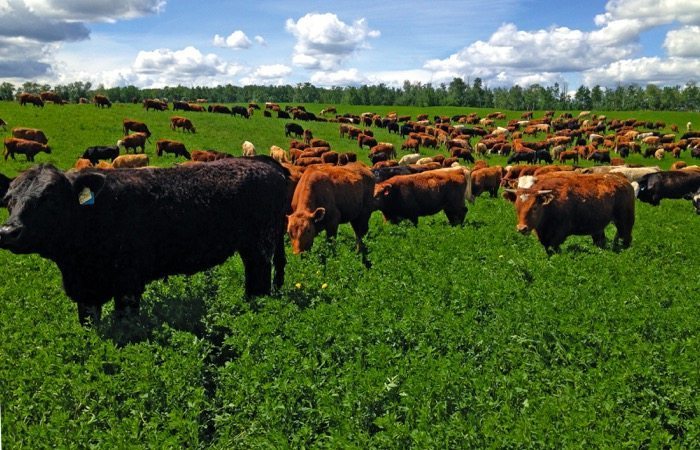
The compartmentalised digestion systems of ruminant farm animals – mainly cows, buffalo, sheep and goats – emit about 2.5 billion tonnes of carbon dioxide-equivalent greenhouse gases per year through enteric fermentation – belches and flatulence – 76% from cattle, 14% from buffalo and 10% from small ruminants.
If cows were a country, their emissions would exceed those of the EU, according to former US Sec of Energy, Nobel laureate Steven Chu.
The largest source of direct greenhouse gas emissions from ruminants – 44% – is CH4 (methane), with 90% from enteric fermentation and 10% from manure. Another 29% comes from nitrous oxide, followed by 27% from carbon dioxide.
Methane and nitrous oxide are exponentially more harmful than carbon dioxide. Emissions of these gases are measured in terms of carbon dioxide equivalent. Where CO2 is 1, methane is calculated as roughly 27–30 times as harmful over a 100-year period, rising to about 80–83 times over 20 years — the figure changes because methane breaks down in the atmosphere far faster than carbon dioxide. Nitrous oxide is more powerful still, at 273 times as harmful as carbon dioxide.
REFERENCES
{20911593:NCVVRS4E};{20911593:NCVVRS4E};{20911593:DLBDJ4ZD};{20911593:DLBDJ4ZD}
nature
default
0
2162